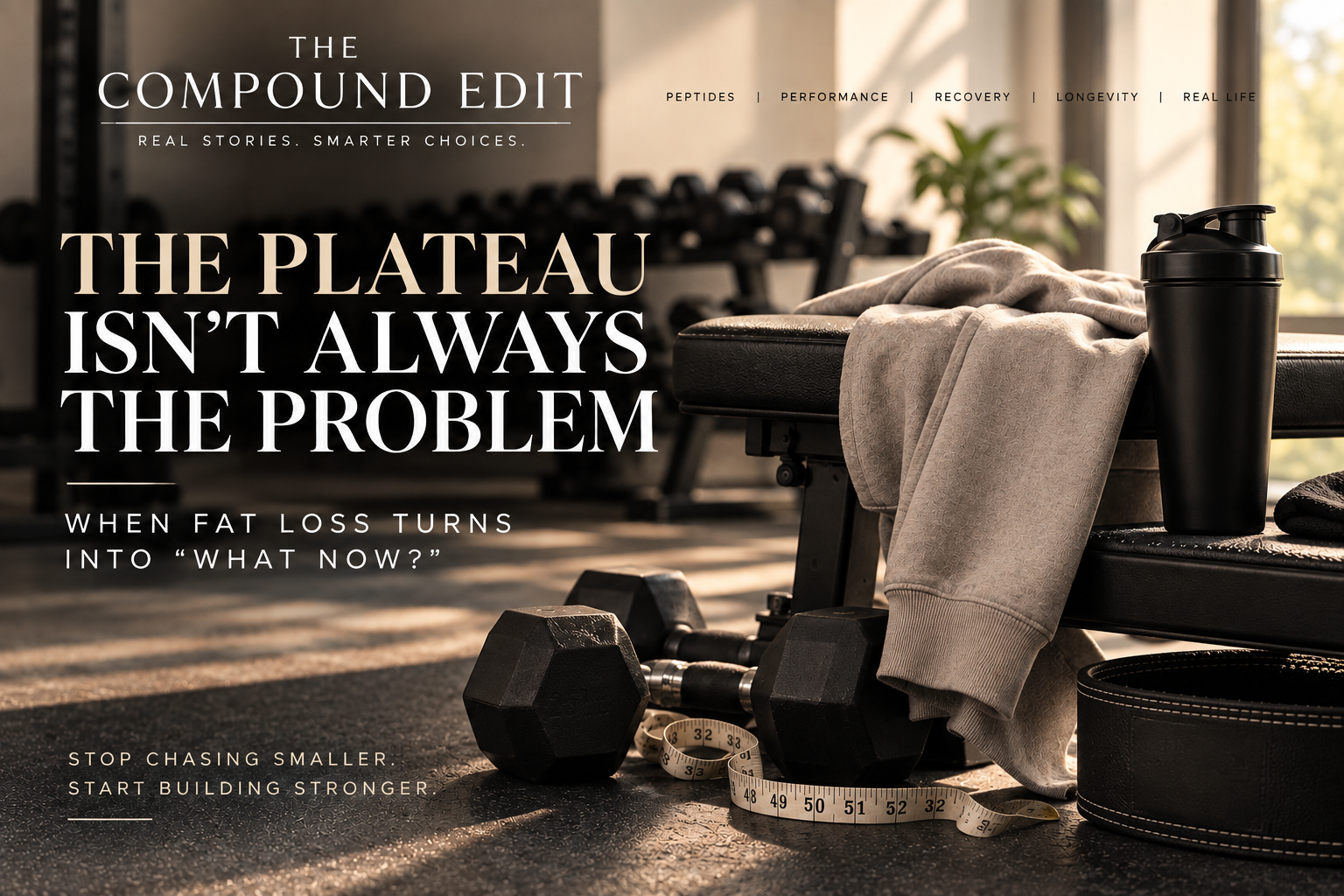
The Plateau Isn’t Always the Problem
When Fat Loss Turns Into “What Now?”
For so long, the goal is simple.
Lose the weight.
You watch the scale. You celebrate every new low. Clothes start fitting differently. Progress photos actually start looking different. And somewhere along the way, seeing that number drop becomes the thing that tells you you’re succeeding.
Then one day, you get there.
Or at least close enough that something strange happens:
You realize you don’t actually want to keep getting smaller.
Now what?
That part of a transformation doesn’t get nearly as much attention as the weight-loss phase. There are endless conversations about calorie deficits, GLP-1s, cardio, protein, plateaus and how to get the scale moving again.
There are far fewer conversations about what happens when the scale shouldn’t keep moving down.
When the Goal Changes
A plateau usually sounds like a bad thing.
But sometimes the number refusing to drop isn’t the problem. Sometimes the problem is that we’re still using an old goal to measure a completely different phase.
There’s a point where losing another five pounds may not create the body you’re actually chasing.
Adding muscle might.
Getting stronger might.
Eating more might.
And yes—that can be surprisingly hard to accept after spending months teaching yourself that lower = better.
The next phase requires a different mindset:
Stop chasing smaller. Start building better.
The Scale Gets a Lot Less Useful Here
Fat loss gives us an incredibly convenient scoreboard.
Yesterday: 132.
Today: 131.4.
Progress.
Muscle building doesn’t give you that same instant gratification.
You might spend weeks training hard and eating well without seeing much movement on the scale. You could even gain a couple pounds while looking leaner, stronger and more athletic.
Your shoulders start developing.
Your legs look stronger.
Your glutes fill out.
You lift weights that used to intimidate you.
Your clothes fit differently even though your body weight barely changes.
Suddenly the scale—the thing you’ve been conditioned to check for validation—is one of the least interesting things happening.
There’s Also a Difference Between Being Light and Looking Fit
This one matters.
Losing weight and building the physique you want are not necessarily the same project.
You can successfully lose a significant amount of weight and eventually realize:
I don’t need to lose more fat. I need more muscle.
That’s when strength training stops being something you do while losing weight and starts becoming the actual goal.
And the priorities change with it.
Enough protein matters.
Progressive training matters.
Recovery matters.
Sleep matters.
And perhaps hardest of all for someone coming out of a long dieting phase:
Enough food matters.
You can’t indefinitely ask your body to build while giving it less and less to build with.
The GLP-1 Conversation Has to Change Too
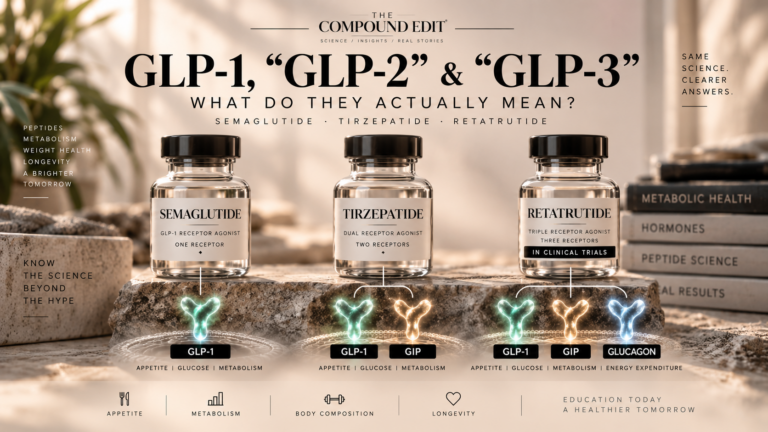
For people using GLP-1 medications or related compounds as part of their weight-loss journey, reaching this stage deserves some thought.
The objective at the beginning may have been appetite control and fat loss.
But if you’re now struggling to eat enough protein, fuel workouts or maintain lean mass because your appetite is still heavily suppressed, it’s worth discussing the new goal with the clinician managing your treatment.
Because the goal isn’t automatically to stay on the highest tolerable dose or continue losing indefinitely.
The goal should match where you are now.
And “I want to maintain my weight while getting stronger and building muscle” is a very different objective from “I need to lose 30 pounds.”
You May Have to Get Comfortable With Eating More
This might be the weirdest part.
After spending months thinking about deficits, intentionally increasing food can feel completely backwards.
Especially when it’s working.
There’s a voice that says:
Don’t mess this up.
But maintenance isn’t failure.
Eating enough to train isn’t failure.
A small calorie increase isn’t undoing your progress.
And gaining a few pounds while adding meaningful muscle isn’t the same thing as regaining the weight you worked hard to lose.
That’s where it helps to start watching different numbers.
How much are you lifting?
Are your reps increasing?
How’s your energy?
Are you recovering?
Are you getting enough protein?
How do your clothes fit?
How do you look in photos taken a month apart?
Those measurements can tell you far more about this phase than whether the scale moved 0.6 pounds overnight.
Maybe You Don’t Need to Break the Plateau
This is the part worth remembering.
Every plateau doesn’t need to be attacked.
Sometimes your body isn’t asking you to find another trick to make the scale move.
Sometimes you’ve simply reached the point where the goal needs to evolve.
You started because you wanted to lose weight.
Then you wanted to look better.
Then somewhere along the way, you discovered that feeling strong feels even better.
That’s not losing focus.
That’s progress.
The finish line moved because you changed.
And maybe the next chapter isn’t about taking up less space.
Maybe it’s about seeing what you can build with it.
Continue Exploring
The Compound Edit is about the part of health, fitness and performance that doesn’t fit neatly into a before-and-after photo—the experiments, lessons, mistakes and conversations that happen in between.
Some of the compounds discussed on The Compound Edit are also available for research through Chuk BioWorks, an affiliated company. We believe that connection should always be transparent.
UNDERSTANDING THE CONNECTION →
EXPLORE CHUK BIOWORKS → www.chukbioworks.com
The Compound Edit is for educational and informational purposes only. Nothing published here should be interpreted as medical advice, diagnosis or individualized treatment guidance. Always discuss medications, peptides, hormones and significant changes to diet or training with an appropriately qualified healthcare professional.