KLOW: Why Everyone Is Calling It the “Beauty Peptide”
Skin. Hair. Collagen. Recovery. Inflammation.
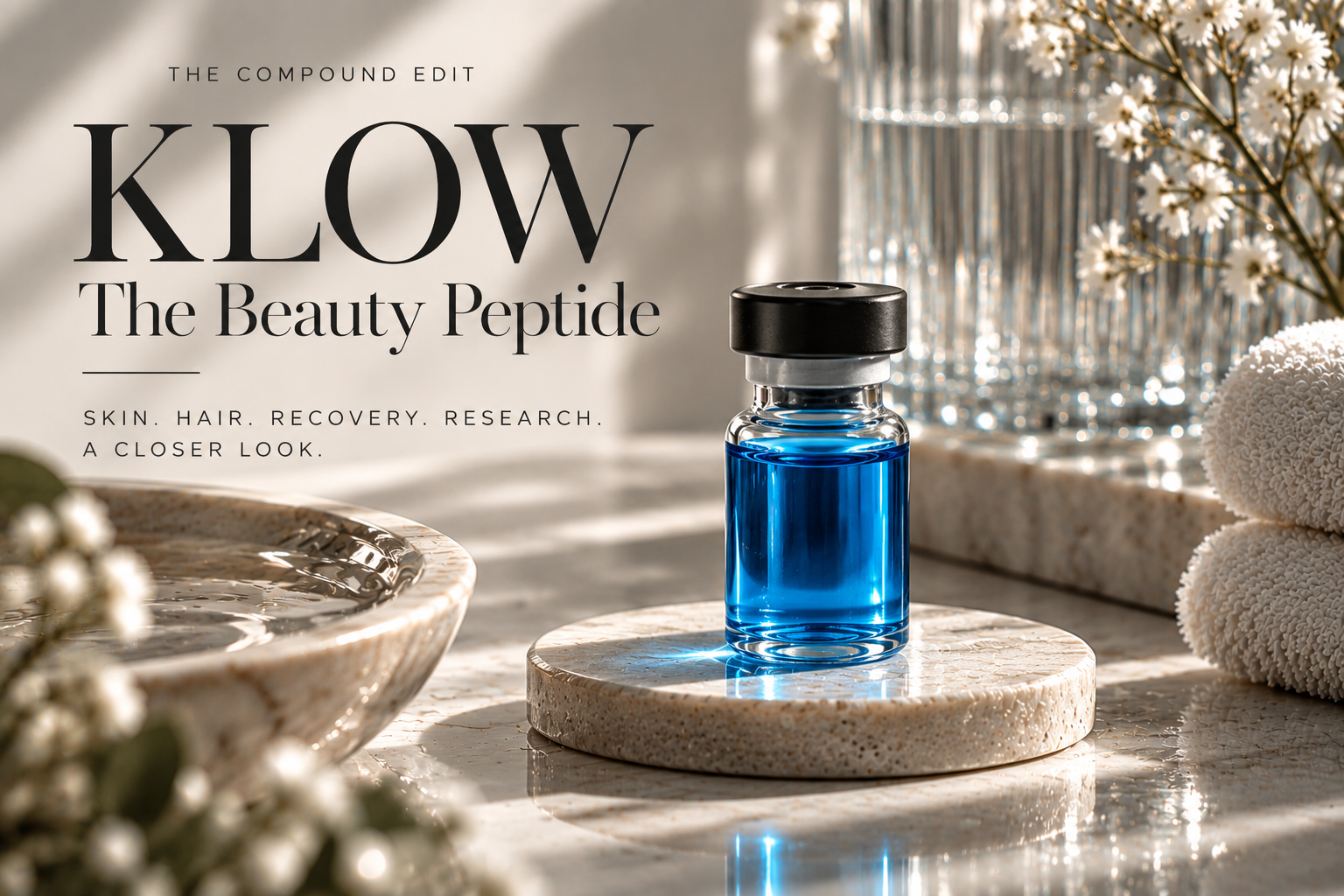
Spend enough time in the peptide world and eventually you’ll run across a bright blue vial with four letters attached to it:
KLOW.
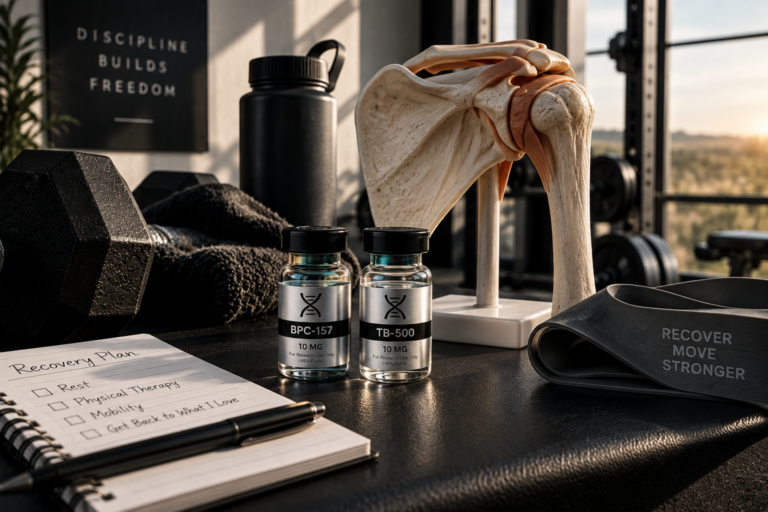
It’s increasingly being talked about as the “beauty peptide” or even the next evolution of the popular GLOW blend. But KLOW isn’t actually one peptide at all. It’s a combination of four separate research peptides—most commonly GHK-Cu, BPC-157, TB-500, and KPV. A common 80 mg formulation contains 50 mg GHK-Cu plus 10 mg each of BPC-157, TB-500, and KPV.
And once you look at what researchers have studied each component for individually, you can see exactly where the “beauty” reputation came from.
So… What Exactly Is KLOW?
Think of KLOW as a four-part research blend built around skin and connective-tissue remodeling, repair, and inflammatory pathways.
The name itself is largely a research-market/community designation rather than the name of an approved medication. There isn’t an FDA-approved drug called KLOW, and formulations can vary between suppliers.
The four commonly included components are:
GHK-Cu — the skin-focused component
This copper-binding tripeptide is probably the biggest reason KLOW gets associated with beauty.
GHK-Cu has been investigated for its involvement in collagen and elastin production, fibroblast activity, extracellular-matrix remodeling, wound repair, and skin biology. Compared with the other ingredients in KLOW, it also has more direct history in cosmetic and topical skin research.
And yes—that copper is also responsible for the unmistakable blue color people associate with GHK-Cu-containing blends.
BPC-157 — the repair component
BPC-157 has become one of the most talked-about experimental peptides in the recovery world.
Most of the published evidence is still preclinical, particularly animal research investigating tendon, muscle, gastrointestinal and other tissue-repair processes. Human evidence remains extremely limited, so the enormous claims you’ll see online have gotten well ahead of the clinical science.
But conceptually, its inclusion in KLOW isn’t about making your face prettier overnight.
It’s there because healthy-looking tissue and tissue repair are closely connected concepts.
TB-500 — the remodeling component
This one needs an important clarification.
TB-500 is associated with thymosin beta-4, which has been investigated for processes including cell migration and wound repair. But commercial TB-500 is not simply interchangeable with the full-length thymosin beta-4 used in much of the published research.
That’s an important distinction that gets lost constantly on social media.
KPV — the “K” that changes GLOW into KLOW
And finally, there’s KPV.
KPV is a tiny three-amino-acid fragment associated with alpha-melanocyte-stimulating hormone. Preclinical research has explored its anti-inflammatory activity, including inflammatory signaling and intestinal inflammation models. Human dermatology evidence, however, is lacking.
This is essentially what separates the commonly marketed KLOW blend from GLOW: KLOW adds KPV to the familiar GHK-Cu/BPC-157/TB-500 combination.
Why Call It a “Beauty Peptide”?
This is where marketing and science need to be separated.
There isn’t a clinical trial showing that taking KLOW makes people younger-looking, improves their hair, tightens their skin, or produces a particular cosmetic transformation.
Instead, the nickname comes largely from connecting the research surrounding its individual ingredients—particularly GHK-Cu and its relationship with collagen, elastin and skin remodeling—with the repair and inflammatory pathways being investigated for the other components.
In other words:
The nickname makes sense. The clinical proof isn’t there yet.
And that’s a distinction worth remembering anytime something becomes the newest obsession in peptide circles.
The Biggest Thing Nobody Mentions About KLOW
Here’s perhaps the most interesting part:
KLOW itself hasn’t actually been studied as KLOW.
Researchers have studied its ingredients separately. But there are currently no controlled studies demonstrating what happens when GHK-Cu + BPC-157 + TB-500 + KPV are combined in this particular blend, including whether they enhance one another, interfere with one another, or change the safety profile.
So when someone says:
“KLOW does X.”
The scientifically accurate translation is usually:
“One or more ingredients in KLOW have been investigated for something related to X.”
That’s a much less exciting sentence.
It’s also a much more accurate one.
Beauty From the Inside Out—or Really Good Marketing?
Probably a little of both explains the fascination.
GHK-Cu has legitimately interesting research behind it. Tissue repair and inflammatory signaling are legitimate areas of investigation for the other components.
But combining four interesting research compounds doesn’t automatically create one clinically proven super-peptide.
And perhaps that’s what makes KLOW worth watching.
Not because we already know exactly what it does.
Because we don’t.
The science behind the individual pieces is intriguing enough that researchers have reasons to keep asking questions—but the popularity of the finished blend has moved much faster than controlled human research.
For now, KLOW sits in that increasingly familiar peptide-world territory:
Fascinating biology. Enormous online buzz. And a whole lot still left to prove.
Continue Exploring
The Compound Edit follows the evolving science surrounding peptides, metabolic health, recovery, performance and longevity — separating what researchers actually know from what’s simply gaining traction online.
The Compound Edit is affiliated with Chuk BioWorks. That relationship helps support this publication, but our goal here remains the same: explore the research honestly, including where evidence is promising, uncertain or simply not there yet.
EXPLORE CHUK BIOWORKS → www.chukbioworks.com
The Compound Edit is for educational and informational purposes only and is not medical advice. Compounds discussed may be experimental, investigational, or not approved for human use. Always discuss medical decisions with a qualified healthcare professional.