GHK-Cu in Skincare: The Copper Peptide That Made Me Rethink My Routine
Sometimes the biggest changes in your skincare routine come from one small addition.
I’ve tried different skincare products over the years, but recently I started incorporating something new into my routine: GHK-Cu, also known as a copper peptide.
And I have to say, I’ve noticed a difference in my skin.
Not in an overnight, wake-up-looking-ten-years-younger kind of way. But enough that I’ve found myself paying closer attention to how my skin looks and feels.
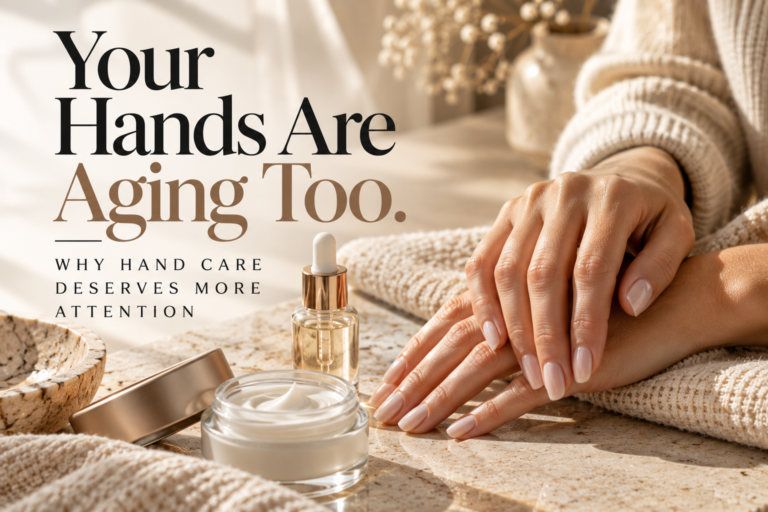
Now I’m thinking about taking it a step further and incorporating copper peptides into my hand-care routine, too.
Because if we’re going to pay attention to the skin on our faces, why are we forgetting about our hands?
What Exactly Is GHK-Cu?
GHK-Cu is a naturally occurring copper-binding peptide found in the human body.
It’s made up of three amino acids bound to copper, and researchers have studied its potential involvement in skin repair, collagen-related processes, and tissue remodeling.
As we age, our skin naturally changes. Collagen production declines, elasticity can decrease, and fine lines become more noticeable.
That’s where copper peptides have attracted attention.
Laboratory research suggests GHK-Cu may influence biological processes involved in maintaining and repairing skin.
But here’s an important distinction: promising laboratory findings don’t automatically mean dramatic anti-aging results in humans. Clinical evidence for topical GHK-Cu is still relatively limited.
Why Are People Adding Copper Peptides to Their Skincare?
Copper peptides have become increasingly popular in skincare formulations, particularly serums and moisturizers designed for mature or aging skin.
Some of the potential benefits being studied include:
- Skin firmness: Supporting processes associated with collagen and elastin.
- Skin texture: Potentially improving the appearance of uneven or rough skin.
- Fine lines: Helping support the skin’s overall appearance over time.
- Skin recovery: Participating in biological pathways associated with tissue repair.
These are potential benefits, not guaranteed outcomes.
And while copper peptides are interesting, they shouldn’t replace the basics that have stronger evidence behind them, especially daily sunscreen.
My Experience Adding GHK-Cu to My Routine
This is where the research became personal for me.
I started using GHK-Cu in my facial skincare routine, and I’ve genuinely noticed a difference in my skin.
It’s one of those things that makes you look in the mirror and think, Okay, something is different here.
I wasn’t necessarily looking to completely overhaul my routine. I was curious about copper peptides and wanted to see what incorporating them into my skincare would be like.
And so far, I’ve been impressed.
Of course, my experience is just that: my experience. Skin can change for a number of reasons, including hydration, weather, other skincare products, and consistency.
But it’s been enough to make me want to keep learning about it.
Can You Add GHK-Cu to Your Face Lotion or Serum?
This is one of the questions that makes copper peptides particularly interesting.
You don’t necessarily need an entirely new skincare routine to incorporate them.
There are commercially formulated copper peptide serums and moisturizers that can fit into a routine you’re already comfortable with.
However, there’s a difference between using a finished skincare product containing GHK-Cu and mixing raw GHK-Cu powder or a reconstituted research compound into a lotion yourself.
Skincare formulations involve more than simply combining ingredients.
Concentration, pH, stability, preservatives, and ingredient compatibility all matter. A homemade mixture may not distribute evenly or remain stable, and a product intended for research or injection isn’t automatically suitable for cosmetic use.
For that reason, a properly formulated topical copper peptide product is the more sensible option.
How I’d Approach a Copper Peptide Routine
If you’re interested in trying one, keep things simple.
Start with a finished cosmetic serum or moisturizer specifically formulated with copper peptides. Follow the product’s instructions, patch-test a small area first, and introduce it gradually rather than adding several new products at once.
If your skin tolerates it, consistency is generally more useful than constantly changing products.
And don’t forget sunscreen. Copper peptides aren’t a substitute for protecting your skin from UV damage.
Why I Want to Start Using Copper Peptides on My Hands
Here’s something I’ve been thinking about lately.
We spend so much time taking care of our faces, but our hands are exposed to many of the same environmental stressors.
Sunlight, frequent washing, cold weather, cleaning products, and everyday wear can all affect how the skin on our hands looks and feels.
Over time, hands may develop dryness, uneven pigmentation, fine lines, and a thinner appearance.
I’ve been happy with the changes I’ve noticed in my facial skincare routine, so naturally I’ve started wondering what a copper peptide hand cream or serum might do.
There isn’t strong clinical evidence specifically showing that GHK-Cu reverses aging in the hands, but it’s an area I’m curious to explore.
My plan is to focus on a well-formulated topical product, pair it with a good hand moisturizer, and be consistent about using SPF on the backs of my hands.
Because hand care deserves a little attention, too.
Is GHK-Cu Really Worth the Hype?
I think copper peptides are worth learning about.
There’s some fascinating science behind them, and the potential applications in skincare are interesting.
But I also think we need to be realistic.
GHK-Cu isn’t proven to erase wrinkles, reverse aging, or replace established skincare treatments. We still need better human studies to understand its long-term effectiveness and safety.
What I like about it is the combination of emerging science and the possibility of making a simple addition to an everyday skincare routine.
And personally? I’ve enjoyed the changes I’ve noticed so far.
My Final Thoughts
I’ve become much more interested in skincare ingredients that have actual biological research behind them.
GHK-Cu is one of those ingredients.
I’m happy with what I’ve noticed in my own skin, and I’m excited to see how incorporating a copper peptide product into my hand-care routine goes.
Maybe it’ll become another permanent part of my skincare lineup. Maybe I’ll learn something different along the way.
Either way, I’ll share the experience.
Because sometimes the most interesting part of exploring skincare isn’t finding the next miracle product.
It’s learning what works for your own skin.
Disclaimer: This article is for educational and informational purposes only. It reflects personal experience and emerging skincare research, not medical advice. GHK-Cu is not FDA-approved as a treatment for skin aging. Research-grade or injectable preparations should not be mixed into cosmetic products or applied to the skin without appropriate formulation and safety testing.
Continue Exploring
Curious about the science behind GHK-Cu and other peptides?
At The Compound Edit, we believe understanding the science is just as important as exploring the possibilities. From skincare and healthy aging to emerging peptide research, there’s always something new to discover.
If you’re interested in learning more about the compounds discussed throughout our articles, you can also explore Chuk BioWorks.
A Note on Transparency: The Compound Edit has an ownership connection to Chuk BioWorks, a supplier of research-use compounds. Our articles are intended to share educational information, research, and personal experiences—not to promote unapproved medical or cosmetic uses. Research-grade compounds are not intended for personal skincare use, and readers should choose properly formulated cosmetic products for topical application.
Stay curious. Keep learning. Continue exploring.
Keep Reading on The Compound Edit
Interested in learning more about peptides, skincare, and the science behind them? Here are a few more articles worth exploring.
- GHK-Cu: More Than Just a Skincare Trend — Explore the science behind copper peptides and why researchers are interested in them.
- NAD+ and Cellular Health — Learn why NAD+ has become such a popular topic in longevity research.
- Epithalon and the Science of Aging — Take a closer look at this intriguing peptide and what scientists are studying.
There’s always more to discover.