
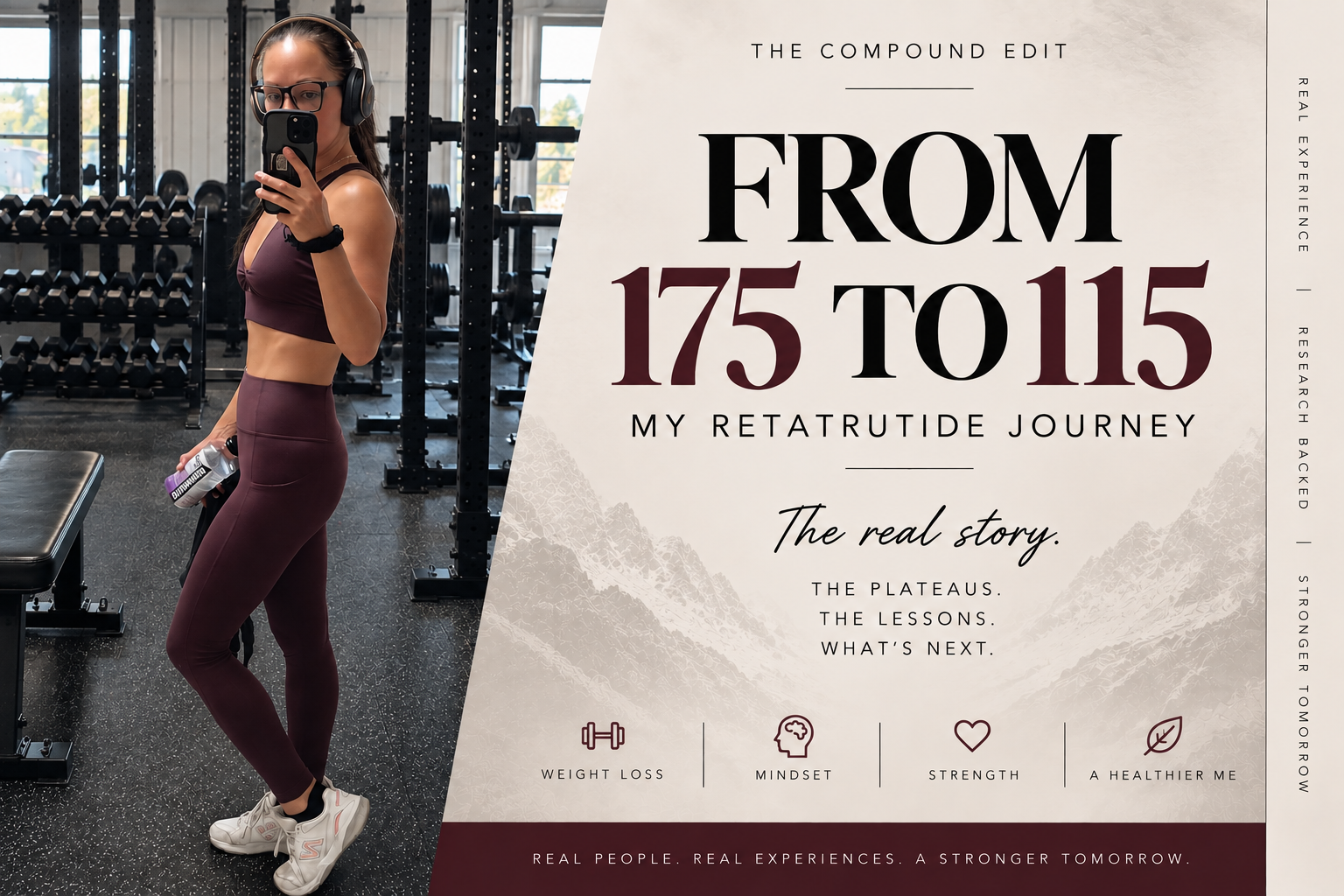
From 175 to 115: What My Retatrutide Journey Actually Looked Like
My weight-loss story didn’t start with retatrutide.
It actually started about two years earlier, at 175 pounds.
Over those two years, I worked my way down to around 145 pounds on my own. Thirty pounds gone—and I was proud of that because I knew how much work had gone into getting there.
But then something changed.
At first, the scale just stopped moving.
I could deal with a plateau. I’d been losing weight long enough to know they happen.
But then the number didn’t just stay the same.
It started going back up.
And no matter what I seemed to do, I couldn’t get it moving in the other direction again.
That was probably the most frustrating part of this entire journey. I already knew I could lose weight because I’d done it. I knew how to watch what I ate. I knew how to be disciplined.
But suddenly, the things that had worked before weren’t giving me the same results.
By February, I was back up to around 157 pounds.
That’s when retatrutide entered my story.
And over the next six months, my relationship with food, the scale, the gym—and eventually my entire goal—changed more than I expected.
By August, I was around 115 pounds.
If I just showed you those two numbers—157 and 115—it would be easy to tell this as a simple before-and-after story.
I started retatrutide. I lost 42 pounds. The end.
But that isn’t really what happened.
And it leaves out the first 30 pounds I fought to lose on my own, the weight I regained, the plateaus, the weeks when the scale wouldn’t cooperate, and the unexpected point where I realized something completely different:
I didn’t want to lose any more weight.
For the first time in years, my goal wasn’t to make the number on the scale smaller.
I wanted to get stronger.
I wanted muscle.
I wanted to look athletic.
And learning how to make that transition has probably been one of the most interesting parts of this entire experience.
The first thing I noticed wasn’t actually the scale
One of the biggest differences for me was food.
Before retatrutide, losing weight required a lot of conscious effort. There was always that internal negotiation happening around eating—what I should eat, how much I should eat, whether I was still hungry.
With retatrutide, that changed.
My appetite decreased and getting full became much easier. Food simply didn’t demand the same amount of attention.
And when you’ve spent years actively trying to control your weight, having that mental noise turn down is hard to describe until you’ve experienced it.
But there’s another side to appetite suppression that I didn’t appreciate at the beginning.
Eventually, you still need to eat.
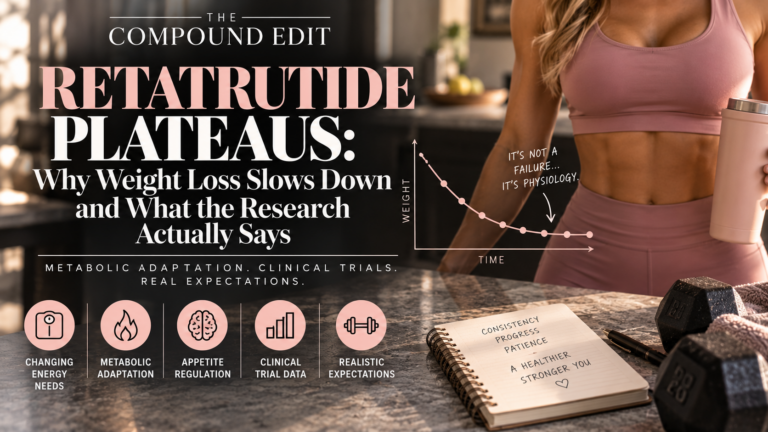
Then I hit another plateau
By May, I was hovering around 129–130 pounds.
And despite everything that had happened up to that point, seeing the same numbers over and over still messed with my head.
I started wondering whether retatrutide had stopped working.
Was this it?
Had my body simply decided 130 was where we were staying?
Looking back, I wish I’d paid less attention to individual weigh-ins and more attention to what was happening over several weeks.
Because eventually the scale started moving again.
And by August, I was around 115.
Then came the problem I never expected
For years, success had meant one thing:
Lose weight.
Then suddenly I was standing at the opposite end of the problem.
I didn’t need to lose more.
In fact, I didn’t want to lose more.
I was going to the gym regularly and my priorities were changing. Instead of asking how I could make myself smaller, I started asking how I could build my body back up in the right places.
More muscle.
More strength.
Better performance.
And that required changing a mindset I’d spent years developing.
Eating enough became harder than eating less
This is something I don’t think gets discussed enough with strong appetite suppression.
When your goal is simply weight loss, eating less can feel like success.
When you’re trying to build or preserve muscle, though, chronically under-eating becomes a problem rather than an accomplishment.
Protein started mattering to me differently.
Strength training mattered differently.
And I had to stop treating the lowest possible calorie intake as automatically being the best day.
That’s still something I’m working on.
I also stopped letting the scale be the entire scoreboard
Going from 175 to 145 taught me that I could lose weight through persistence.
Going from 157 to 115 taught me something different:
A lower number isn’t always the next goal.
There comes a point where body composition, strength, energy and how you actually feel in your body matter more than watching another pound disappear.
I spent years wanting the scale to go down.
Now I’m learning to be perfectly okay if it doesn’t.
That’s a strange mental adjustment.
But it’s a good one.
Would my experience be everyone’s experience?
Absolutely not.
This is my experience, not a prediction of what will happen to someone else.
Retatrutide is still an investigational drug, and individual responses, side effects and weight-loss outcomes vary. My experience also happened alongside changes in my eating habits, training and lifestyle, so I can’t attribute every change in my body to one compound.
But I think personal stories are worth sharing—as long as we don’t confuse them with clinical evidence.
And that’s part of why I wanted to tell mine here.
The part of the journey I’m most excited about hasn’t happened yet
I started at 175 pounds wanting to lose weight.
I eventually got myself to 145.
I struggled when the scale began climbing again.
I started retatrutide around 157.
And eventually I reached approximately 115.
But 115 isn’t the finish line.
Now I want to see what happens when the focus isn’t getting smaller anymore.
I want to build muscle.
I want to get stronger.
I want to make sure I’m fueling my body instead of constantly trying to take something away from it.
So this isn’t really my retatrutide before-and-after story.
It’s more like the end of the first chapter.
The next one is about building.
Keep Reading: Understanding Retatrutide
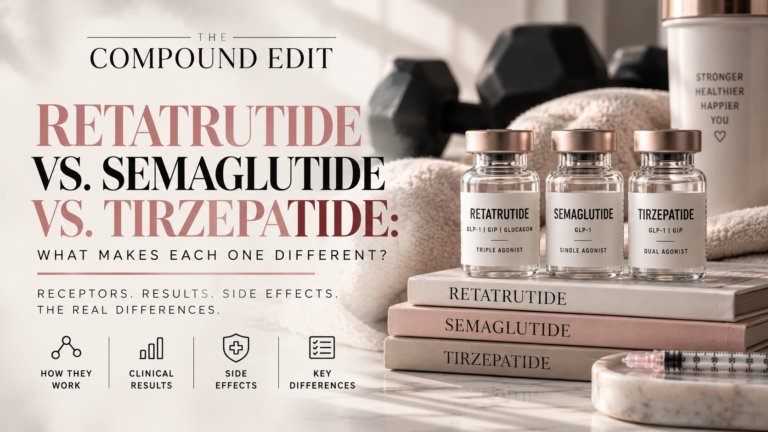
My experience is only one person’s story, and personal experience isn’t the same thing as clinical evidence. If you want to dig deeper into the science, read why retatrutide is getting so much attention before FDA approval, how GLP-1, GIP and glucagon work differently, and why retatrutide can feel like it suddenly stopped working during weight loss.
This article describes my personal experience and should not be interpreted as a recommendation or expected result. Retatrutide remains investigational and is not FDA-approved for weight management as of this writing. Individual experiences and risks can vary. The Compound Edit is for educational purposes and does not provide medical advice.
Continue Exploring
The Compound Edit is affiliated with Chuk BioWorks, a research compound company. If you’re interested in exploring the compounds discussed throughout The Compound Edit, you can learn more through Chuk BioWorks.
EXPLORE CHUK BIOWORKS →www.ChukBioWorks.com
Disclosure: The Compound Edit is affiliated with Chuk BioWorks. Content on The Compound Edit is provided for educational purposes and does not constitute medical advice.


One Comment
Comments are closed.